
TelemetryDeck Fall Update 2026 (diary of a SaaS founder)
This is about our summer break, a record month, upcoming features, and (of course) anti-fascism.
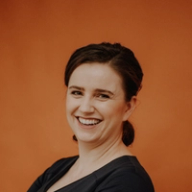

It’s fall in the Northern Hemisphere, and for me, that means I finally get to study Latin vocabulary with my kids again, the garden needs to be winterized, and all our meals are back inside because it’s just too cold out there. As the last traces of tan fade and all the spiders come indoors to spend the winter, the final stretch of the year has begun.
For the first time since TelemetryDeck was founded, Daniel and I both took a real summer vacation where we unplugged and were unreachable. There was only one time he had to restart a few servers. During his bike ride across the Alps. In the rain.
That’s when this iconic photo was taken:
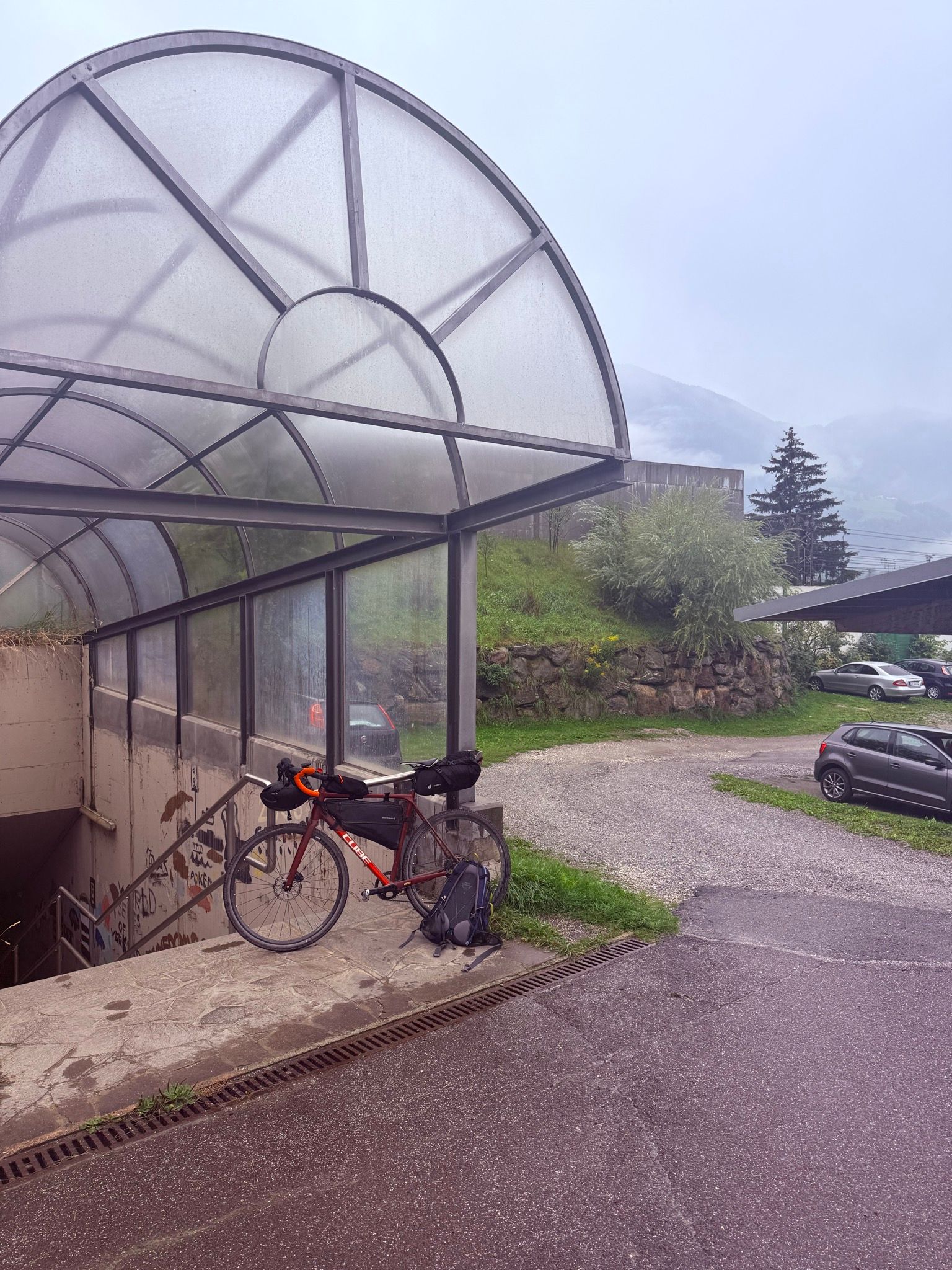
My family and I had better luck with the weather in Croatia:

Happy Problems: Where Does Growth Come From?
Our growth is currently accelerating month over month. And by growth, we mean the number of newly created accounts that are starting to track their usage data with TelemetryDeck (over a 700% increase from October 2025 to October 2026). And we mean the number of users upgrading to a paid plan (over a 5,000% increase from October 2025 to October 2026). This gives us “happy problems,” such as having to order additional servers. But we’re ok with that.
We can’t attribute this growth to any single factor; rather, we believe it’s a combination of factors.
- Trust: We’ve been in the market for so long now that it positively influences customer trust (in the early days, we often heard people say they didn’t even know “how long TelemetryDeck will be around”). And analytics is, after all, a long-term business, considering that many of our customers want to compare the trends in their usage data over the course of years.
- Recommendations: We have a product that’s so good and stable that recommendations are on the rise. Anyone who’s been working with TelemetryDeck for a few months or years can recommend us with confidence.
- SEO and GEO: We’re increasingly being recommended as an analytics solution by both search engines and generative AI. This is because we’ve been investing in optimizing our visibility for a long time and have further increased our resources for this in the recent months. According to self-reported attribution, about 50% of our new customers come to us via LLMs like Claude or ChatGPT.
The revenue we generate goes almost entirely toward covering our operating costs. We use whatever funds are left over to ensure the company’s long-term stability so that we’re prepared for tougher times. We’re also investing in the team. And we can finally afford to book the hotel that’s closest to the event venue on business trips, rather than the cheapest one. That may sound like a small thing, but it’s a nice symbol of the success we’ve achieved over the past few years.
With TelemetryDeck, we haven’t achieved the rocket-like growth we originally projected for investor meetings. And that’s a good thing. I remember the queasy feeling in my stomach back when we wrote a business plan that assumed a 2M investment and called for hiring 30 people within 6 months. That completely overwhelmed me. Now, with seed funding from business angels, we’ve built a sustainably growing company that provides a more or less substantial portion of the livelihood for eight people—without a venture capital fund breathing down our necks. And that’s pretty damn cool.
A Look at the Roadmap
We’re currently developing new metrics for our customers. The goal is to measure inactivity among app users. To do this, we’re introducing a feature called “Heartbeats,” which continuously reports that user activity is still happening. And in the future, we’ll also be able to allow SQL queries because we’ve found a way to do so securely. We’ll let you know as soon as the tests are complete.
As a result, we can now address a very specific use case: the new AbEM metrics that must be tracked within German digital health apps. If you don’t operate any of these apps yourself, you can skip this section, but if you work at a DiGA company, please get in touch with us, as we’re currently gathering feedback on our new feature.
This fulfills my dream of expanding even further as a provider into the highly regulated healthcare products sector. I know that our privacy-first approach allows us to solve major tracking challenges here, and I’ve been working for years to raise our profile in this industry. I’m incredibly excited that this has now come to fruition and that we’re collaborating with great partners (more on that soon).
Internal: New Project Management
Daniel has developed a new approach to how we handle projects internally, and the entire team has recently begun testing his new model. The goal is, on the one hand, to avoid managing too many projects (features, content, marketing campaigns, admin stuff) at the same time and, on the other hand, to establish a deadline where none existed before. Plus: Everyone can navigate everyday micro-decisions better when the north star is clearly visible, and we’re not bogged down by daily or weekly agile rituals.
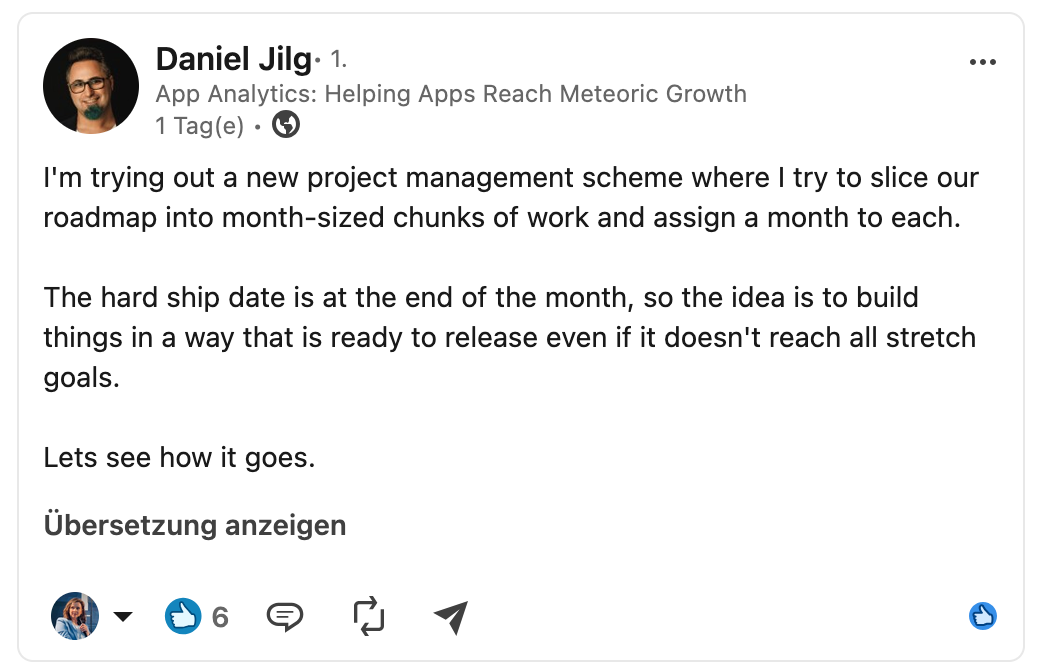
Up until now, we’ve simply kept working on features until we were satisfied with them. But sometimes our idea of “good” is different from what our customers perceive as “good.” With the new model, we want to move faster and get feedback more quickly, rather than spending a long time working on something that customers then use in an entirely different way than we anticipated.
A Few Thoughts on Digital Sovereignty
I spend a lot of time thinking about the topic of digital sovereignty. That is the concept that software can be used independently, autonomously, and securely. My focus is on Europe’s digital sovereignty and that of our administrative levels in Germany. In this capacity, as a member of the City of Augsburg’s Digital Council (Digitalrat), I also advise our mayor and the city council.
This often involves our dependence on U.S. companies, which we here in Europe struggle with for several reasons.
- For one thing, companies headquartered in the U.S. (regardless of the physical location of their servers) are subject to U.S. jurisdiction and the resulting data access guaranteed by the CLOUD Act. This leads to major compliance issues for companies that process data from EU citizens. These problems are significantly less severe when using providers based within Europe.
- The alignment of major U.S. tech corporations with the Trump administration and their support for its fascist policies has led to a shift in thinking in Europe regarding trust in the leadership of these corporations. The willingness to switch providers is on the rise.
- The widespread adoption of AI systems, coupled with the implementation of the European AI Regulation, has led to greater scrutiny of what data is being collected or sold and for what purposes. The perspective on the systems that enable this rapid development through data purchasing and trading has shifted. In my circle, I’m noticing a growing sense of caution.
I deal with all these issues to a greater or lesser extent every week. In the near future, I’d also like to offer a talk on this topic and discuss how we can prevent totalitarianism—controlled by megalomaniacal “tech bros” through software—from infiltrating our lives and our companies. Please reach out, if you are looking for a speaker.
Anti-Fascist Economics (currently reading)
Today I’d like to tell you about a book that (ironically) was recommended to me by the Instagram algorithm: Anti-Fascist Economics by Isabella Weber. She is a professor of economics at the University of Massachusetts Amherst. She became known to a wider audience for her role in designing the first German gas price cap in 2022.
The book immediately appealed to me because, while I’ve long known how closely fascism and capitalism are intertwined and reinforce each other, I’m not yet very familiar with the reverse perspective that of explicitly anti-fascist politics. I’ve just started reading it and am still in the history section, but I’ve already learned an incredible amount. I’m curious to see what insights I can draw from this book for our own company. The book is available in German and English.

Take care
As fall moves into winter, we’re continuing to develop TelemetryDeck into a privacy-first analytics service for everyone, while trying our best to participate in anti-fascist economics ourselves. I hope your garden is winterized, your Latin flashcards are top-notch, and you always have a pumpkin-spiced something this fall!